Sonos vs. In-Ceiling Speakers: Which Is Right for Your Atlanta Home?
"Standalone Sonos, a Sonos Amp with built-in speakers, or a fully wired system: how they compare on sound, looks, scaling past five rooms, and cost with walls open or closed."
You're building or remodeling, and the music question has come up. One of you wants a Sonos on the kitchen counter because it's simple. The other wants speakers in the ceiling so nothing sits out. Search "Sonos vs in-ceiling speakers" and you mostly get forum threads from a decade ago.
Here's how the choice actually breaks down in Atlanta homes today, from a team that installs both.
The short answer
It isn't really Sonos or in-ceiling speakers. There are three setups, and each one fits a different house:
- Standalone Sonos speakers for one or two rooms, closed walls, or a home you won't be in long.
- A Sonos Amp powering built-in speakers when you want the Sonos app but nothing on the counter, in a handful of rooms.
- A fully wired multi-room system with the amplifiers in one rack when you're past about five rooms or the walls are open.
If your walls are open right now, run speaker wire to every room you might want music in, whichever system you pick. Wire is cheap during framing and expensive after drywall.
The three setups, explained
1. Standalone Sonos speakers
Each speaker has its own amplifier and connects over Wi-Fi. You plug it in, open the app, and it plays. Rooms group together from your phone.
- Good for: a bedroom, an office, a renter, or a quick first step.
- The catch: every speaker needs an outlet and a spot on a shelf or counter, and every one of them leans on your Wi-Fi.
2. Sonos Amp with built-in speakers
The Sonos Amp is a small box that powers passive in-ceiling or in-wall speakers. You still use the Sonos app, but the speakers disappear into the ceiling. This is the middle ground most people mean when they search "Sonos vs built-in speakers."
- Good for: a kitchen, living room, or covered porch where you want clean ceilings and the app you already know.
- The catch: you typically need one amp per room or zone. Each one needs power, a network connection, and somewhere to live.
3. A fully wired multi-room system
Speaker wire from every room runs back to one location, usually a closet or network rack. Multi-zone amplifiers there drive all the rooms, with streaming and control layered on top. Wall keypads, an app, and voice control can all run the same system.
- Good for: new construction, large remodels, and homes with five or more zones, including outdoor areas.
- The catch: it takes more planning up front, and it's hardest to add once walls are closed.
Sonos vs in-ceiling speakers on sound
A good standalone speaker on a shelf can sound excellent where you're sitting. It fires in one direction, so the sound is strong near it and thinner across the room.
In-ceiling speakers spread sound evenly over a space. That's ideal for kitchens, living areas, and parties, where you want the same volume everywhere instead of one loud corner. A properly spaced pair at moderate volume fills a room without anyone shouting over it.
The honest limits:
- Bass. Small ceiling speakers give up some low end. Larger speakers, enclosed back boxes, or a hidden subwoofer fix most of it.
- Serious listening. If you sit and listen to records with your eyes closed, neither a ceiling speaker nor a single smart speaker is the answer. A dedicated room with in-wall or floor speakers is. Our home theater room ideas post covers that side.
- Stereo. One standalone speaker in a big room is mono. A pair of ceiling speakers gives you left and right.
Looks and everyday use
Standalone speakers sit out. In an open kitchen that means a speaker and a cord on the counter, and another on the island if the room is large. Some people like the look. Many don't after a year.
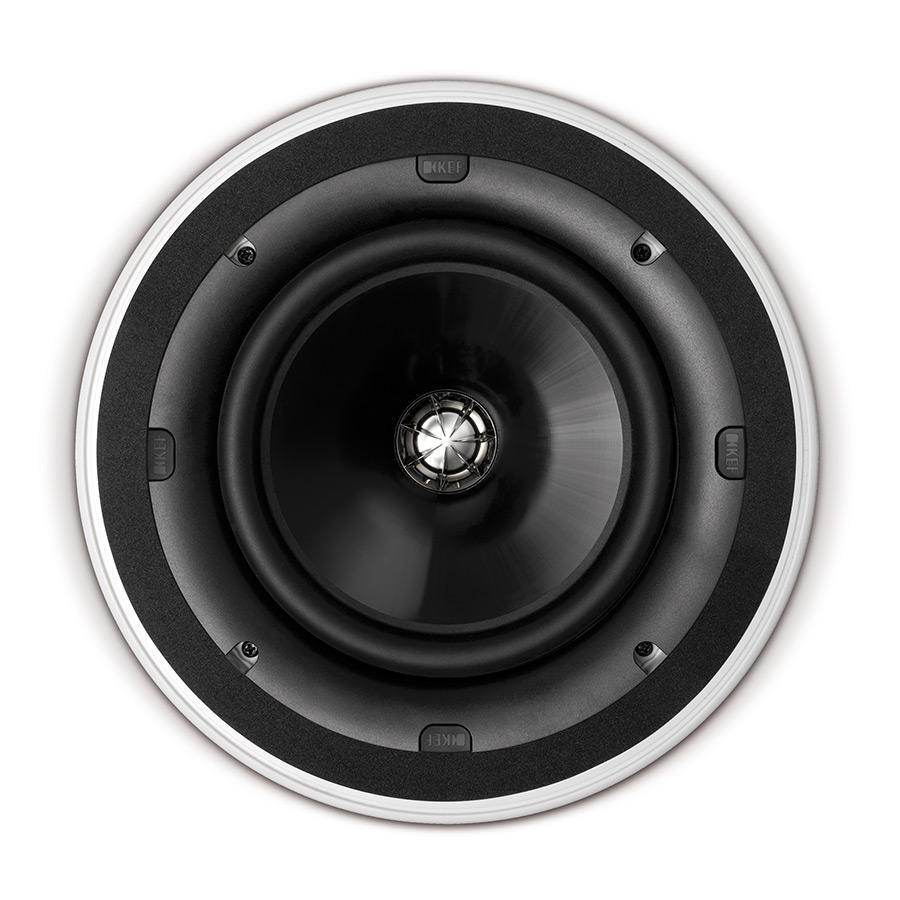
In-ceiling speakers have round or square grilles that can be painted to match the ceiling. Most guests never notice them.
Day to day, all three setups play from your phone. The wired system adds what the others can't easily do: a keypad by the door so anyone in the house, guests included, can turn music on without an app.
Scaling past five rooms
This is where wireless vs wired whole house audio really separates.
With standalone speakers, every new room adds another device on your Wi-Fi. With Sonos Amps, every new zone adds another amp in another cabinet or closet, each needing power and a network connection. By six or eight zones you have equipment scattered around the house, and one weak Wi-Fi spot means one room that drops out.
A wired system keeps every amplifier in one place. Adding a zone means adding a channel at the rack, not a new box somewhere else. It's easier to troubleshoot, cooler running, and quieter.
Whichever way you go, the network matters. Sonos devices work far better on a solid network, and wiring the amps beats relying on Wi-Fi. If your Wi-Fi already struggles at the edges of the house, read mesh WiFi vs wired access points before you add a dozen streaming devices to it.
Walls open vs walls closed
New construction or a gut remodel
For in-ceiling speakers vs Sonos in new construction, the answer is almost always: wire it now. With open framing, speaker wire runs fast and every route is available. You can still buy standalone Sonos speakers later for bedrooms, but you can't easily add wire to a finished ceiling. Our list of the best smart home upgrades for new construction puts audio prewire near the top for this reason.
Plan where the amplifiers will live before the wire goes in. Wire that ends in random spots is the most common prewire regret we see.
A finished home
Closed walls don't rule out ceiling speakers. They change the cost:
- Upper-floor rooms with attic access above are usually straightforward.
- Basements with open or drop ceilings are easy.
- First-floor ceilings under a finished second floor are the hardest, because the wire has to be fished between floors.
In those harder rooms, a Sonos Amp placed nearby with short runs to the speakers can make more sense than home-running everything to a rack. And for a single bedroom, a standalone speaker is often the right call.
What it costs
We don't quote speaker prices here because the right speaker depends on the room. What moves the price:
- Number of zones. Each room or outdoor area adds speakers, wire, and amplification.
- Walls open or closed. Fishing wire through finished ceilings takes far more labor than open framing.
- Speaker quality and size. Larger speakers and back boxes cost more and sound fuller.
- Control. App-only is simplest. Keypads and integration with the rest of the house add to it.
- Network work. Each hardwired Ethernet drop is about $450, depending on the house, and amps and streamers are more reliable on one.
Our multi-room audio work starts from $2,500, and many clients start with the main living area and add rooms later. For a deeper breakdown, see whole-home audio: what it costs and how it works.
Mistakes we see
- One ceiling speaker in a large room. You'll hear it as a spot, not a room full of music.
- Speakers jammed into corners or against walls. Placement matters more than brand.
- No back boxes in ceilings under bedrooms. Without them, sound leaks upstairs.
- Prewire with no plan for the amps. Wire has to end somewhere useful.
- Forgetting the patio. Outdoor speakers are easiest to wire at the same time as indoor ones.
- Building a big wireless system on weak Wi-Fi. The network is the foundation.
What we install and why
For one or two rooms in a finished home, we'll tell you a standalone speaker is fine. For a kitchen and living room you want clean, a Sonos Amp with good ceiling speakers is a smart, affordable step. For new construction and homes with five or more zones, we design a wired system with the amplifiers in one rack, speaker wire home-run to every room, and control from the app, keypads, or voice. It's the setup that still works well ten years later.
Price your own system
Room count, ceilings, and whether your walls are open matter more than any brand comparison. Our online planner helps you map rooms and get a price in a few minutes. StarlightATL offers free consultations across Metro Atlanta, including Suwanee, Johns Creek, Alpharetta, Duluth, Roswell, and Milton. Learn more about our home theater and multi-room audio work.
Ready to Transform Your Space?
StarlightATL offers free consultations for Metro Atlanta homeowners. Let's talk about your vision.
Related Services
See how StarlightATL brings this to life in Metro Atlanta homes.